

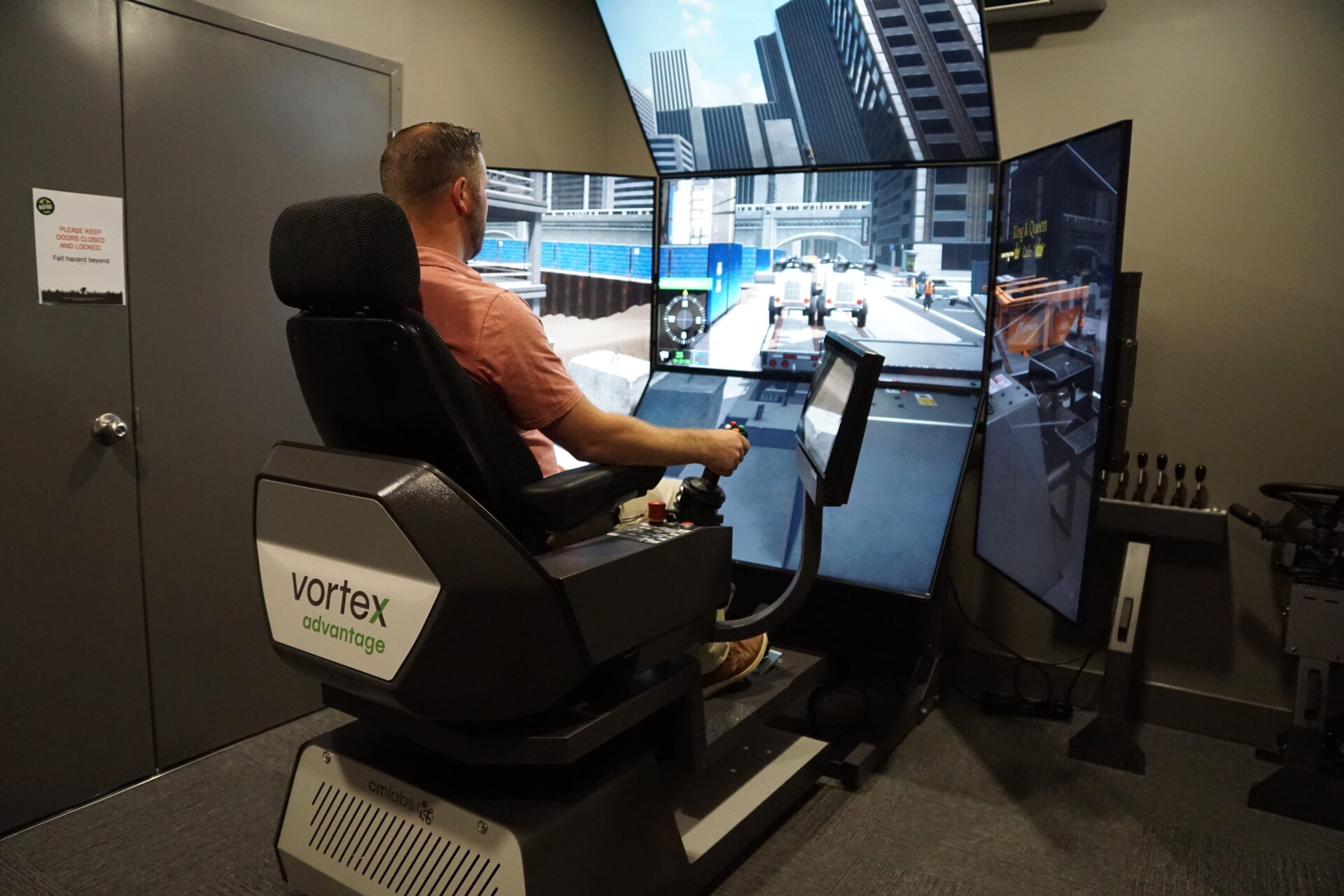
The landscape of crane and heavy equipment training in British Columbia is evolving, and simulator technology is at the forefront of this change. Bigfoot Academy in Abbotsford has introduced a new full-immersion training simulator that allows operators to practice safely before stepping onto an actual job site. The simulator replicates the controls, motion, and sightlines of cranes and earth-moving equipment, giving trainees a realistic, hands-on experience in a controlled environment. Industry attention is growing as companies recognize that simulator training can improve skills, reduce on-site risks, and enhance operational readiness. This article examines the scope, features, and potential benefits of Bigfoot Academy’s simulator for operators and companies.
Simulator Training: Why It Matters in Heavy Equipment Operations
Operator training for cranes and heavy equipment has traditionally relied on a combination of classroom instruction and hands-on experience at job sites. While this approach has value, it comes with inherent risks and significant costs when inexperienced operators handle large machinery. Mistakes on-site can lead to equipment damage, project delays, and safety incidents that affect workers and contractors alike. Simulator training addresses these challenges by providing a controlled environment where operators can practice maneuvers, troubleshoot scenarios, and gain confidence without putting machines or people at risk.
Simulators act as a bridge between theoretical knowledge and practical application, allowing trainees to apply lessons learned in the classroom while experiencing realistic controls, motions, and site conditions. Trainees can repeat exercises, practice complex lifts, and encounter unusual conditions that might be unsafe to replicate on a real job site. This replicates, low-risk practice improves skill retention and builds muscle memory for critical operations.
The advantages of simulator-based training extend beyond safety. Operators can develop skills faster, reduce wear and tear on expensive equipment, and contribute to smoother project execution once they enter the field. In an industry where precision, timing, and awareness are essential, simulators are becoming a key tool in modern operator development.
The Vortex Advantage: What Bigfoot Academy Offers
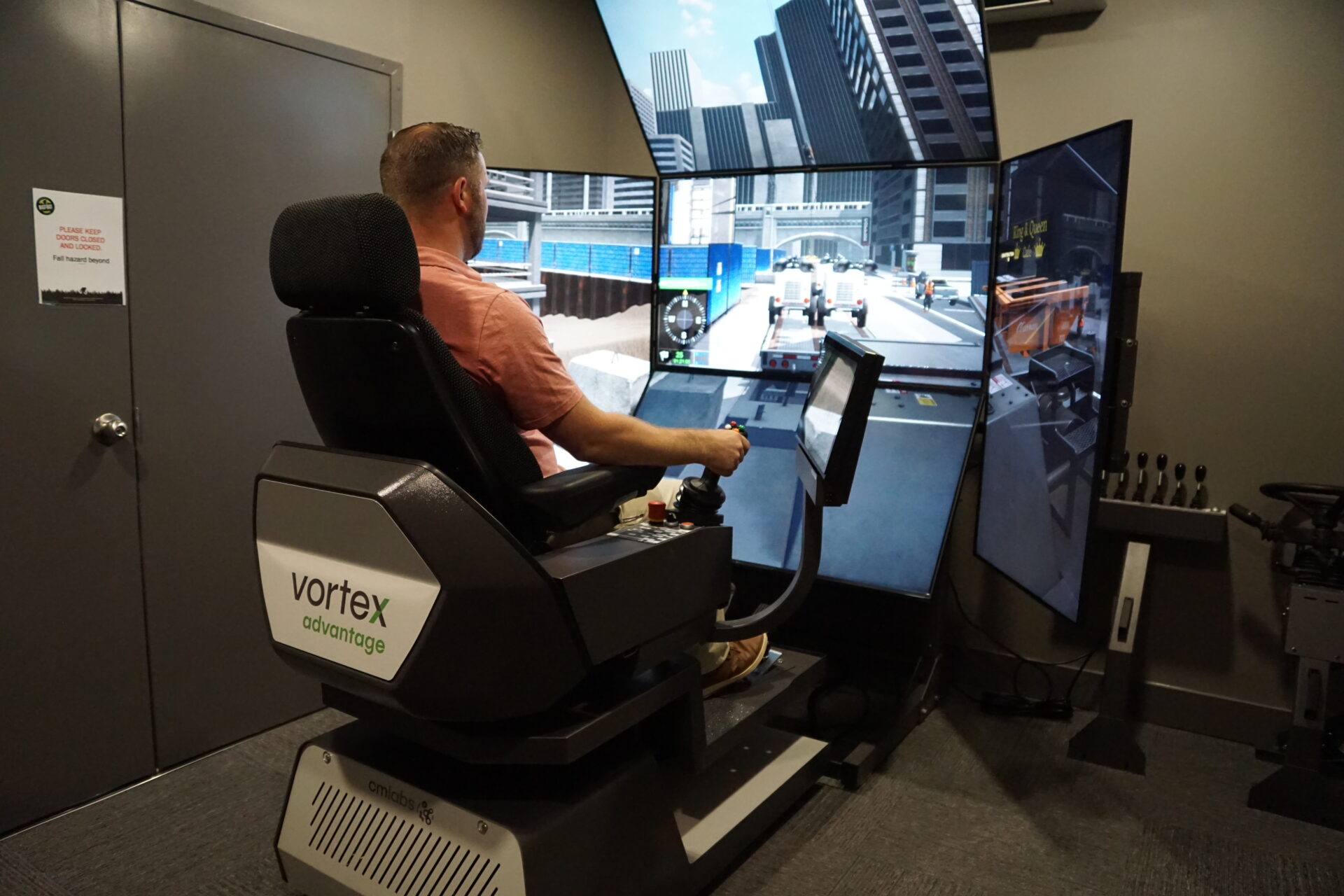
Bigfoot Academy’s new simulator uses CMlabs’ Vortex Advantage technology, a full-immersion platform designed to replicate real-world crane and heavy equipment operations. This advanced system allows trainees to develop skills in a safe, controlled environment that mirrors actual job site conditions, giving operators practical experience without the risks of on-site training.
All-in-One Platform
The Vortex Advantage supports a wide range of equipment types, including tower cranes, rough terrain cranes, and earth-moving machinery such as excavators, wheel loaders, backhoes, bulldozers, and articulated dump trucks. Trainees can switch between machines seamlessly, practicing diverse scenarios without leaving the simulator.
Key Features
Hot-swappable control sets allow operators to move between equipment types instantly, while the 5-screen option provides realistic sightlines and situational awareness. A motion platform replicates the vibrations and movement felt on real machinery, and the touchscreen interface acts as a central hub for exercises, dashboards, and safe load indicators.
Scalable and Flexible Training
The system accommodates individual sessions, small groups, or full-class training. Optional instructor tools enable monitoring and manage trainees progress, offering a structured approach to learning and assessment.
Built to Last
Constructed with a commercial-grade steel frame, professional controls, and industrial shock-mounted computers, the Vortex Advantage is designed for intensive, round-the-clock use. Its durability ensures consistent performance even in busy training centers, making it a long-term solution for companies and operators aiming to develop safe and highly skilled personnel.
Equipment Types Covered: Comprehensive Training Options
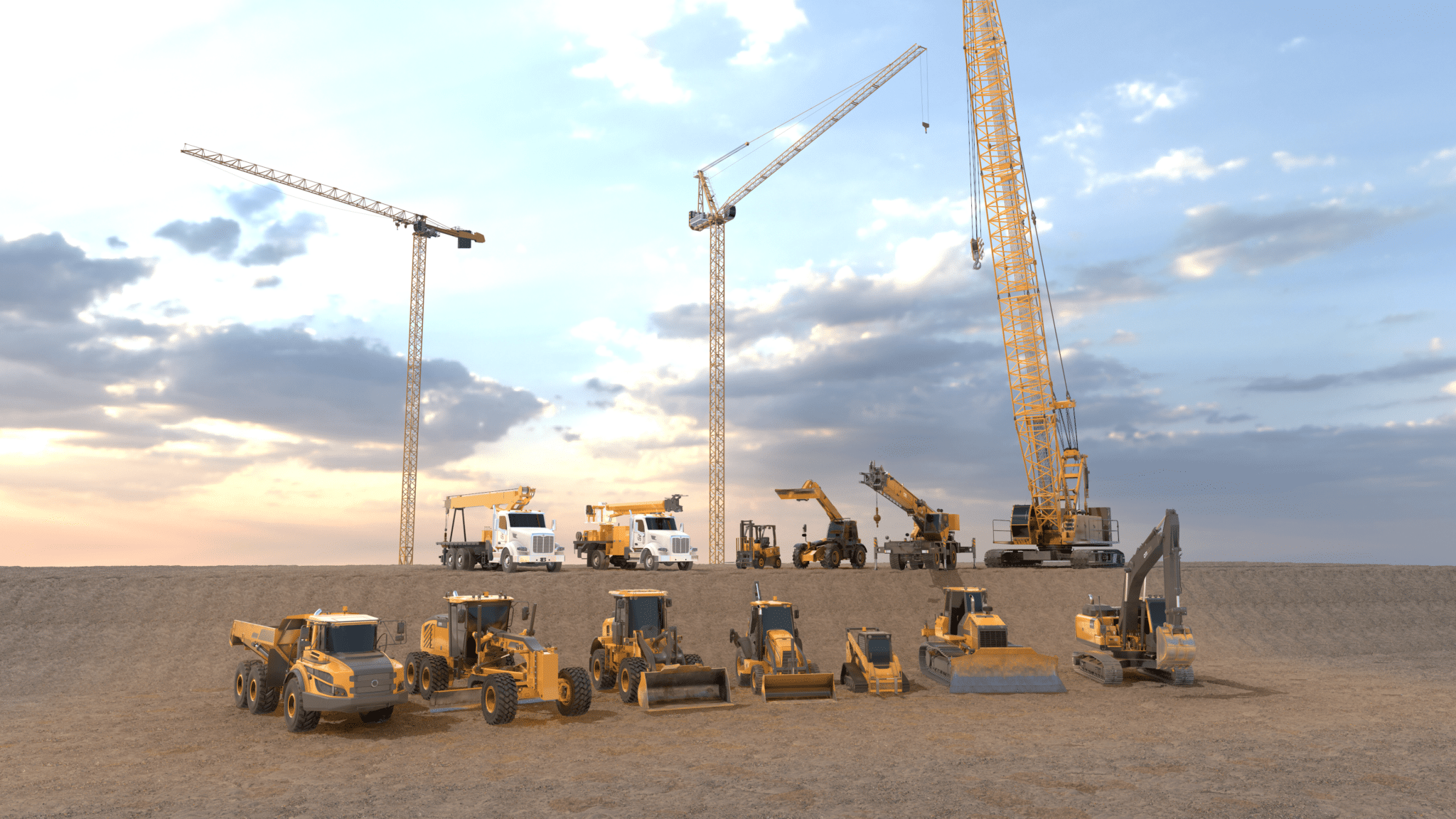
Bigfoot Academy’s simulator training spans a wide range of cranes and heavy equipment, giving operators exposure to machines they will encounter in real-world operations. Crane training includes Flat Top Tower Cranes, Luffing Tower Cranes, Rough Terrain Cranes, Crawler Cranes, and Boom Trucks. Each type has distinct controls and operating characteristics, allowing trainees to practice precise lifts, maneuvering, and load management.
Earth-moving equipment training covers Excavators, Wheel Loaders, Backhoes, Bulldozers, and Articulated Dump Trucks. These machines introduce operators to digging, grading, loading, and hauling tasks in a simulated environment that mirrors actual worksite conditions.
The diversity of equipment available in one simulator provides a unique opportunity for operators to develop transferable skills. Mastering multiple machines in a controlled setting enhances adaptability, situational awareness, and confidence. This approach prepares operators to handle varied job requirements safely and efficiently, giving companies trained personnel capable of performing across different equipment types without unnecessary on-site risk or downtime.
Training Programs and Scheduling Flexibility
Bigfoot Academy offers simulator sessions in 4-hour or 8-hour blocks, allowing trainees to tailor learning to their needs and schedules. These sessions can stand alone or be combined with classroom theory and hands-on practical training, giving operators a complete learning experience that balances knowledge and skill application.
For those pursuing crane operator certification, a mobile or tower crane theory course option is available. This ensures trainees or apprentices receive solid theory knowledge from qualified instructors to boost competence and prepare for a safe career as a crane operator.
The training center is located at 2170 Carpenter Street in Abbotsford, BC, in a specially designed room featuring climate control, air filtration, and adjustable lighting for a comfortable, professional learning environment. Simulator sessions can be scheduled between 7:30 am and 4:30 pm, providing flexibility for individuals and companies seeking training during standard business hours. This structured approach allows operators to gain competence efficiently while accommodating diverse training needs.
Pricing and Course Rebate: Making Training Affordable
Bigfoot Academy offers competitive pricing for simulator training, starting at $95 per hour plus 5% GST, with a minimum booking of four hours. This standard rate provides access to the full simulator experience, allowing operators to practice safely and develop their skills efficiently.
The first simulator training session includes a 20% rebate on the 3-day Construction Hoist Operator Training Course or Level 1 Rigger Certification Course, after receiving simulator training payment.
Benefits for Operators and Industry
Simulator training at Bigfoot Academy offers a unique opportunity for operators to develop skills in a controlled, immersive environment. This approach allows learners to experience realistic scenarios without exposing themselves, colleagues, or equipment to unnecessary risk. Operators can practice maneuvers, lifting techniques, and complex sequences repeatedly, building confidence before transitioning to real equipment.
Enhanced Safety
Using a simulator significantly reduces on-site learning risks. Trainees can make mistakes, experiment with different approaches, and encounter challenging scenarios safely. This translates to safer operations once they are working on active job sites, protecting both personnel and machinery.
Efficiency and Skill Retention
Operators benefit from repeated practice of complex operations, which accelerates skill acquisition and reduces equipment downtime. The immersive simulator replicates actual sightlines, motion, and control feedback, helping learners internalize the actions required for precise performance.
Tracking Progress
Simulator sessions allow instructors and organizations to track trainee progress and competency scores. This data-driven approach supports workforce development by identifying strengths, areas for improvement, and readiness for certification or real-world operations. Industry benefits from operators who are well-prepared, adaptable, and confident, improving overall project efficiency and safety culture.
Industry Impact: What This Means for British Columbia
The introduction of advanced simulator training at Bigfoot Academy has the potential to influence operator training standards across British Columbia. As the construction and heavy equipment sectors face increasing safety expectations, tools like the Vortex Advantage allow operators to gain experience and confidence before stepping onto active job sites.
Companies seeking efficient, cost-effective ways to train crews may view simulator programs as an essential part of workforce development. The ability to practice complex maneuvers safely, track competence, and prepare multiple operators simultaneously makes it a practical solution for organizations of all sizes.
Beyond individual skill development, simulator training can improve overall project readiness. Operators trained on both cranes and earth-moving equipment become more versatile, reducing delays and increasing operational efficiency. By bridging classroom theory with real-world practice, simulators support a culture of safety and competence, positioning British Columbia as a region where high training standards meet practical, hands-on preparedness.

How Bigfoot Academy Fits into the Broader Training Landscape
Bigfoot Academy’s simulator program reflects British Columbia’s growing focus on professional operator development. As the industry emphasizes safety, efficiently, and standardized skill assessment, advanced training solutions are becoming a key part of preparing operators for real-world challenges.
Compared with other simulator offerings in Canada and North America, the Vortex Advantage provides a comprehensive, all-in-one platform capable of training operators on cranes and earth-moving equipment within a single system. Its immersive visuals, motion replication, and hot-swappable controls set it apart in terms of flexibility and realism.
While the simulator delivers high-quality, repeatable practice in a controlled environment, it is designed to complement hands-on training rather than replace it. Operators still gain experience on actual machinery, but simulation bridges the gap between theory and practice. This combination ensures trainees enter worksites with stronger skills, confidence, and awareness, supporting a safer and more competent workforce across the province.
Conclusion
Bigfoot Academy’s simulator provides operators with a realistic and controlled environment where skills can be developed and practiced safely. The system allows trainees to repeat complex operations without risking equipment damage or worksite safety. Companies and training programs in British Columbia can use simulators to complement traditional hands-on instruction, making the transition to live equipment smoother and safer. The industry can recognize simulator training as a practical and forward-looking tool that enhances efficiency, skill retention, and overall job site readiness. It represents a thoughtful step toward balancing learning, safety, and operational demands while supporting operators at every stage of their development.